
One operator.
The whole fleet.
Set the intent once. POSEIDON's AI orchestrator is designed to turn it into coordinated tasks for each vehicle and payload, and the operator approves before anything moves.
In development| How it works
From intent to autonomous mission.
The operator stays in command at every step. POSEIDON is designed to do the planning and coordination.
- Intent
- The operator states the objective, in plain language or through ATAK.
- Plan
- MissionCommand AI allocates vehicles and payloads and builds the plan.
- Approve
- The operator approves. Movement and payload activation are authorised separately.
- Execute
- Onboard autonomy carries it out within approved limits, and is designed to continue if the link drops.
- Report
- Alerts, observations, and history return to the operator.
Riverine | harbours | beaches | 1.5 km offshore and beyond
Intended missions in the littoral.
| Mission | What the fleet is designed to do | Vehicles |
|---|---|---|
| Littoral surveillance | Persistent surface, subsurface, and aerial sensing along the approaches | ShadowRay, ShadowDart, ShadowHawk |
| Maritime protection | Detect, identify, and track vessels of interest at borders, ports, and infrastructure | ShadowDart, ShadowHawk |
| Communications relay | Small surface nodes that extend the network | ShadowDart |
| Search and survey | Search and rescue support, and seabed and environmental surveys | ShadowRay, ShadowDart, ShadowHawk |
| Deployment concept
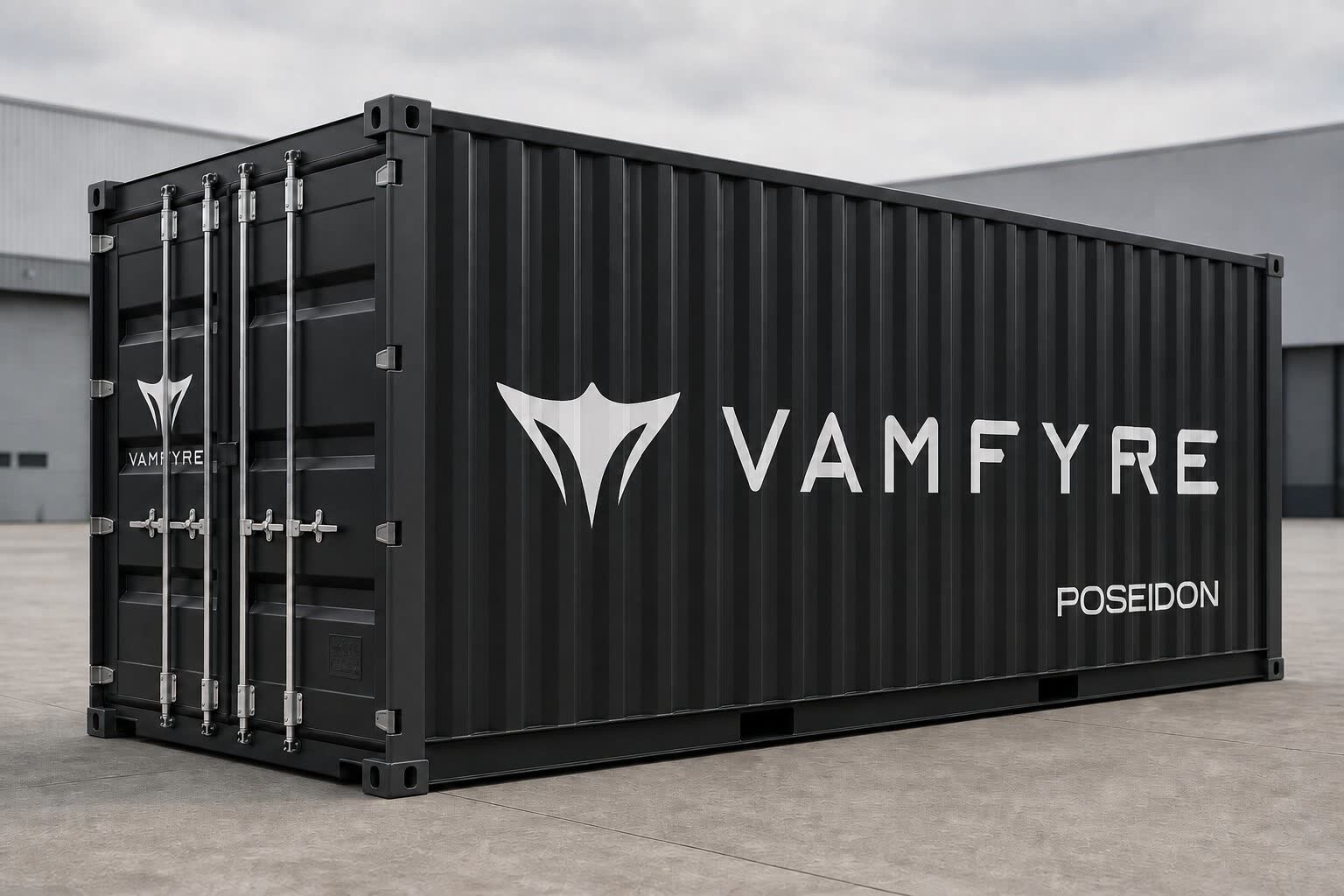
Designed to deploy from one container.
A standard 20 ft container, moved by road or sea, set up at the shore.
- Vehicles
- Surface, subsurface, and aerial robots.
- Mission computing
- POSEIDON compute and operator interfaces.
- Payloads
- Mission-selected sensors and payloads.
- Links
- Mesh, cellular, satellite, and acoustic.
Next
Meet the fleet.
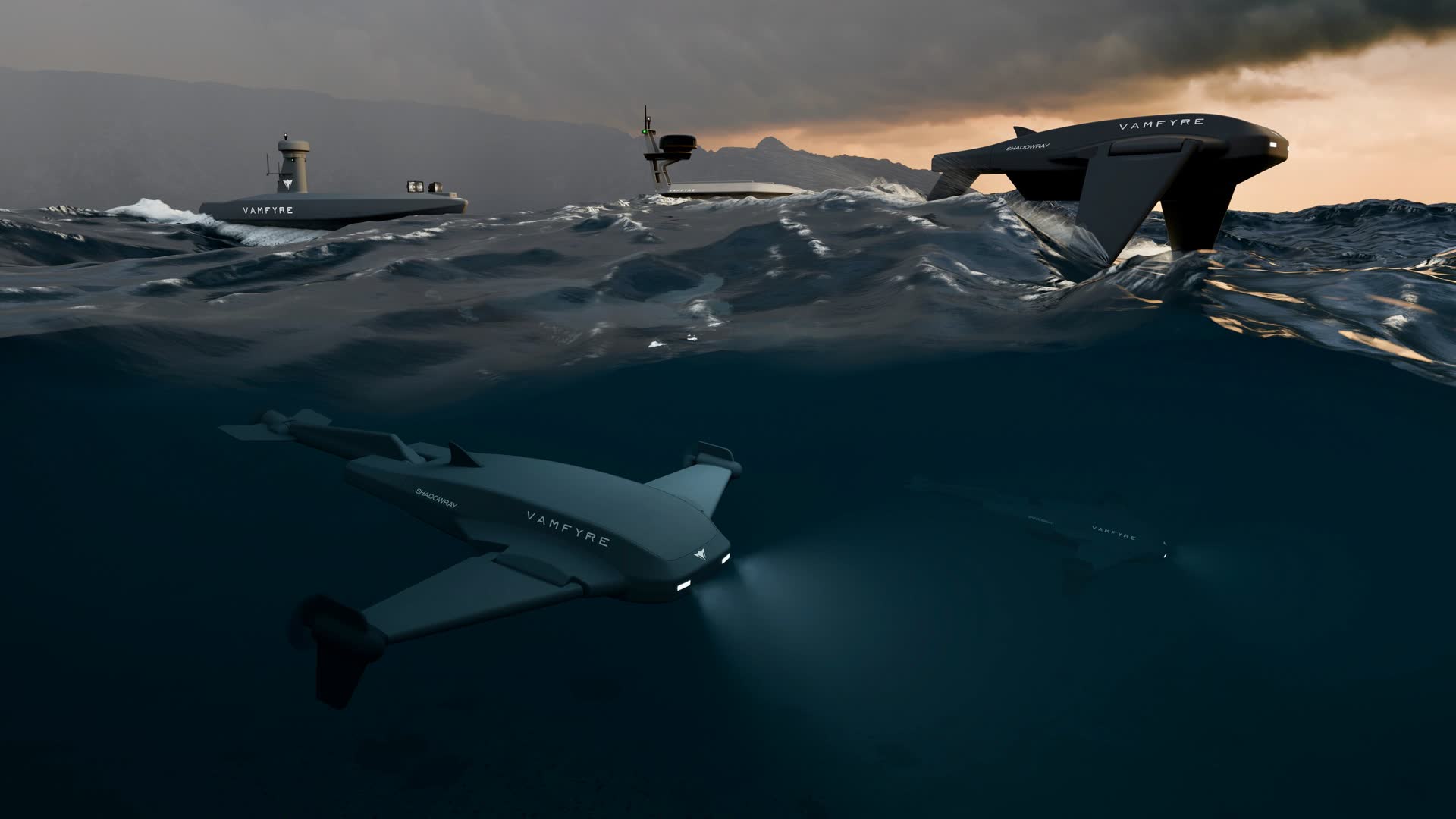
ShadowRay, ShadowDart, and ShadowHawk: surface, subsurface, and air.
ShadowSwarm